BROWSER-NATIVE · WEBGL2 · NOTHING TO INSTALL

CLAUDE OF DUTY

A first-person shooter that ships no art assets at all. Every texture, every mesh, every animation and every sound is generated from code the moment you open the page.

Needs a WebGL2 browser and a few seconds to build the world on your GPU.

Backdrop: concept art — not actual gameplay

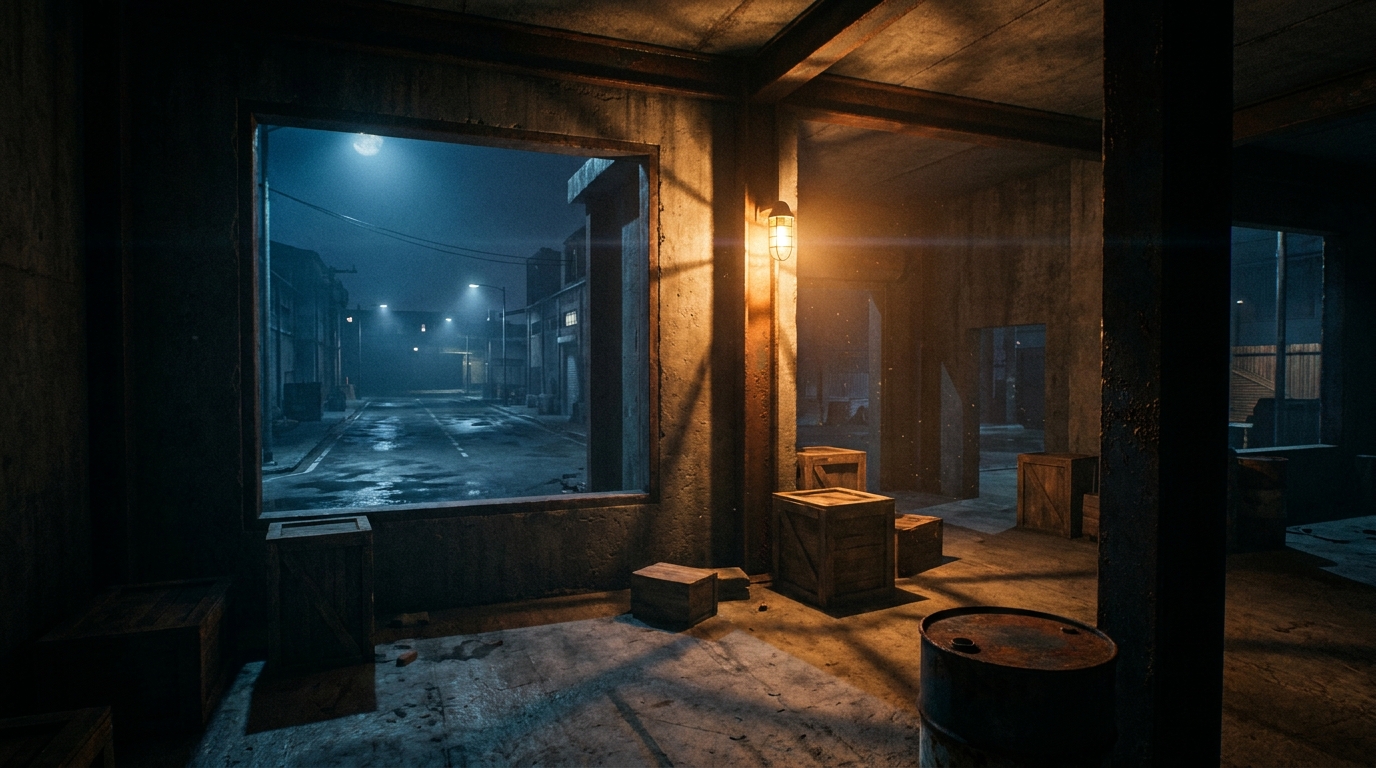
Concept art of a derelict workshop interior at night, lit by one lamp, looking out onto a dark street

Concept art — not actual gameplay

THE WHOLE POINT

There is no assets folder.

Most games ship gigabytes of authored content. This one ships a single JavaScript bundle. The concrete, the brick, the rusted steel, the soldiers, the weapons, the reverb on a gunshot in a stairwell — none of it exists until your GPU computes it at load time. That is also why the first load takes a moment, and why the download is smaller than a single photograph from most games.

  • 0image, model or audio files in the repository
  • 19procedural surface materials, generated on the GPU
  • 1runtime dependency — three
  • ~500 KBgzipped, the entire game

CAPTURED IN ENGINE

Every pixel here was computed, not drawn.

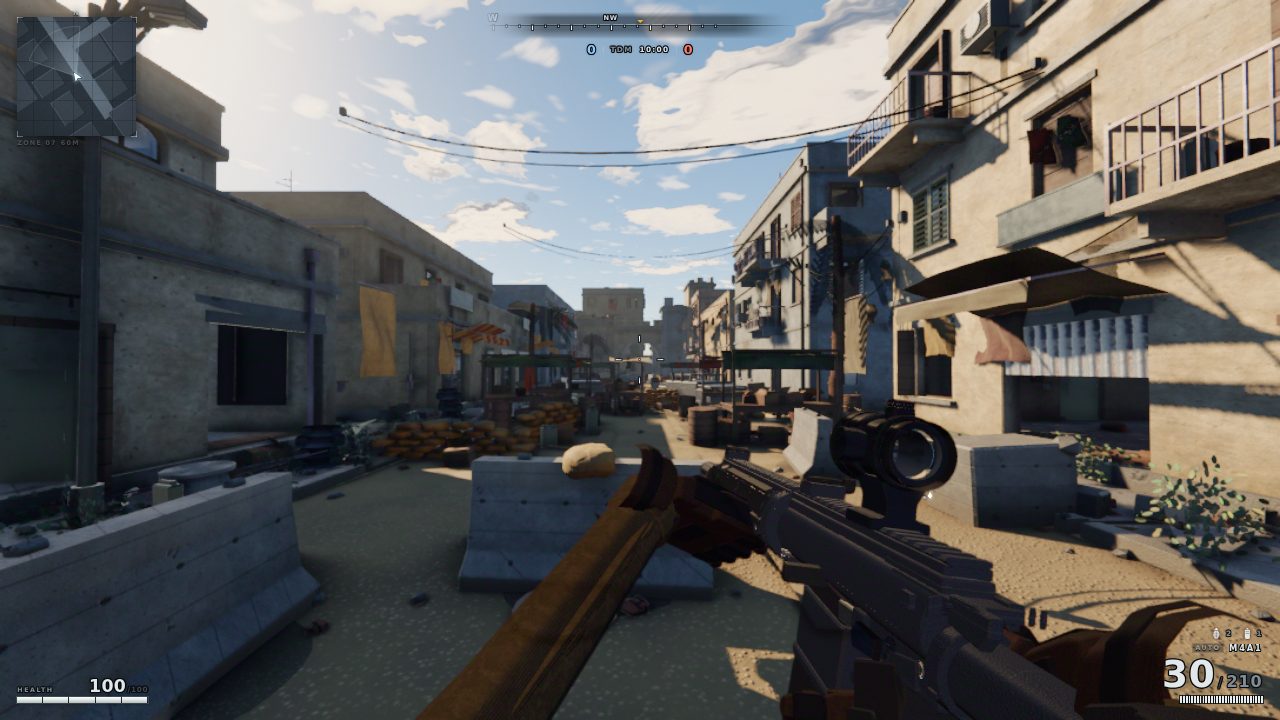
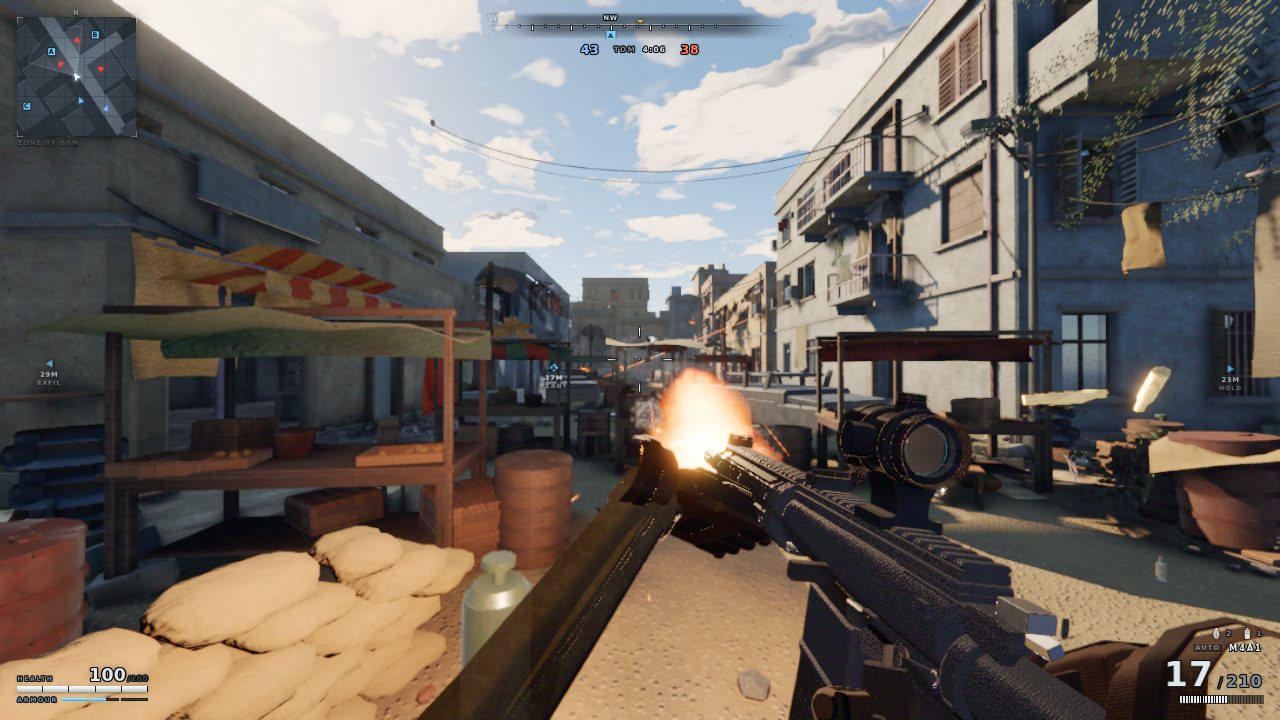
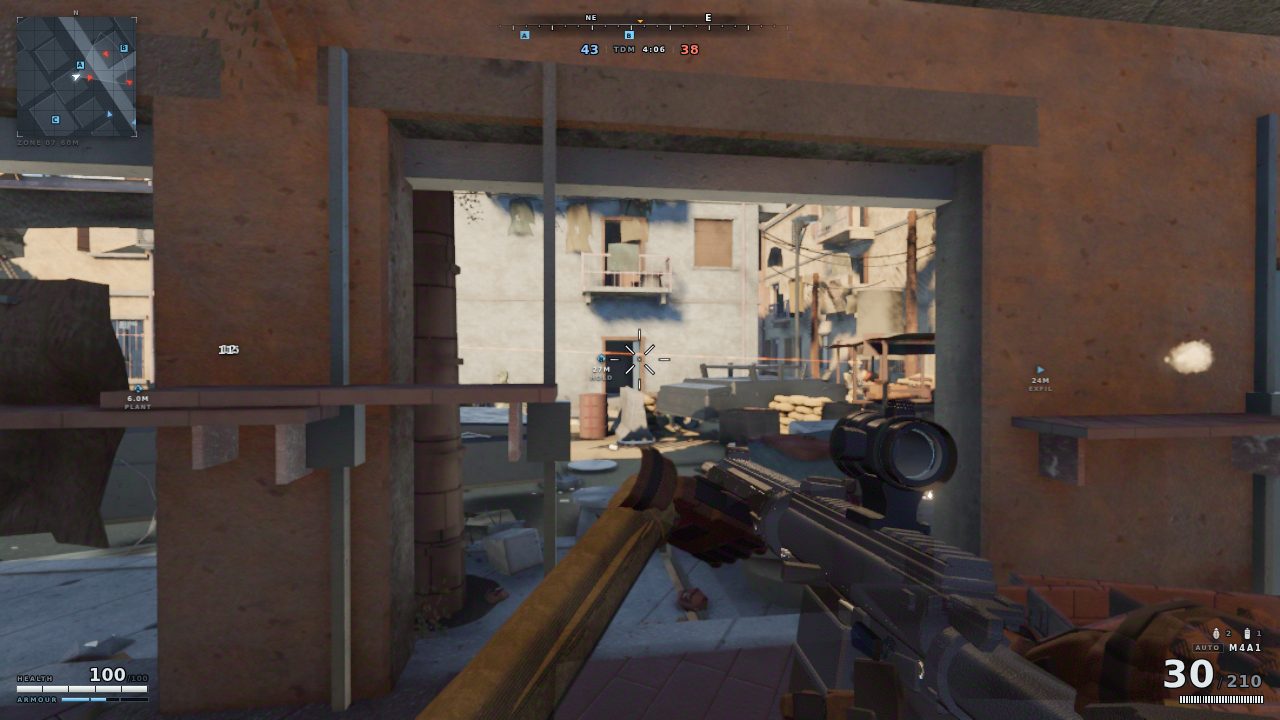
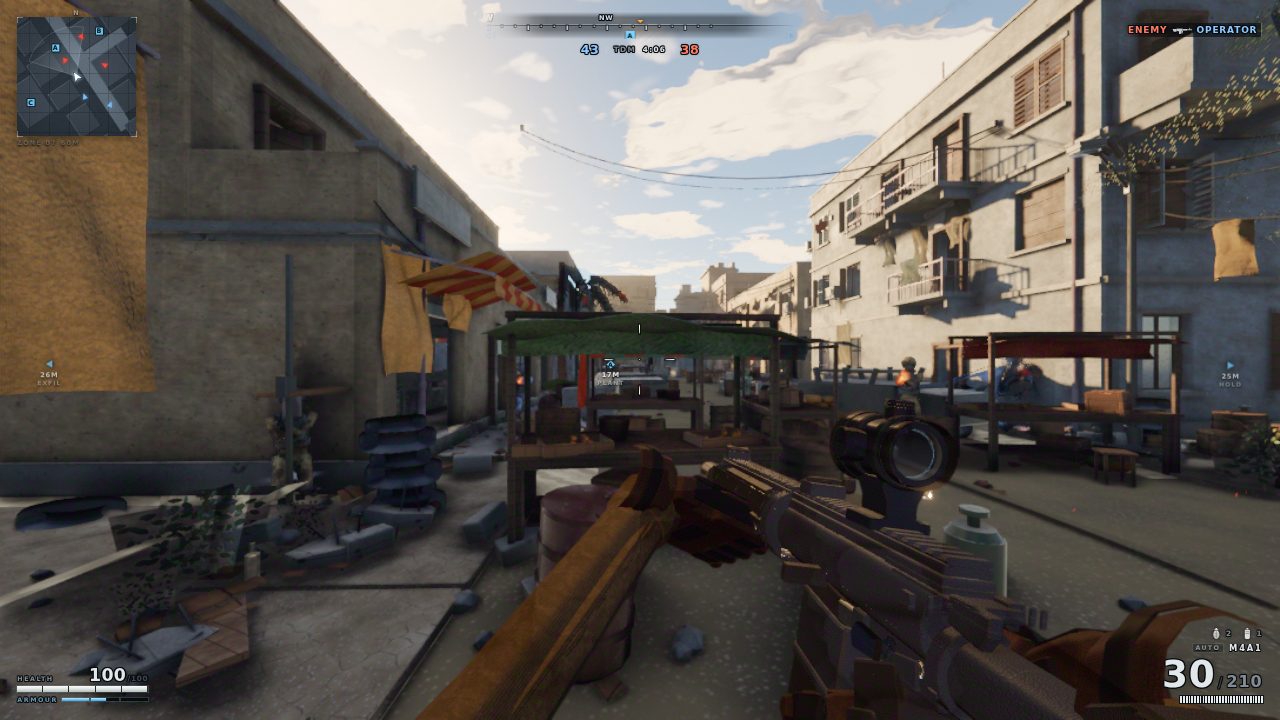
These are unedited screenshots from the running game, taken through the project's own capture harness. Nothing is concept art.

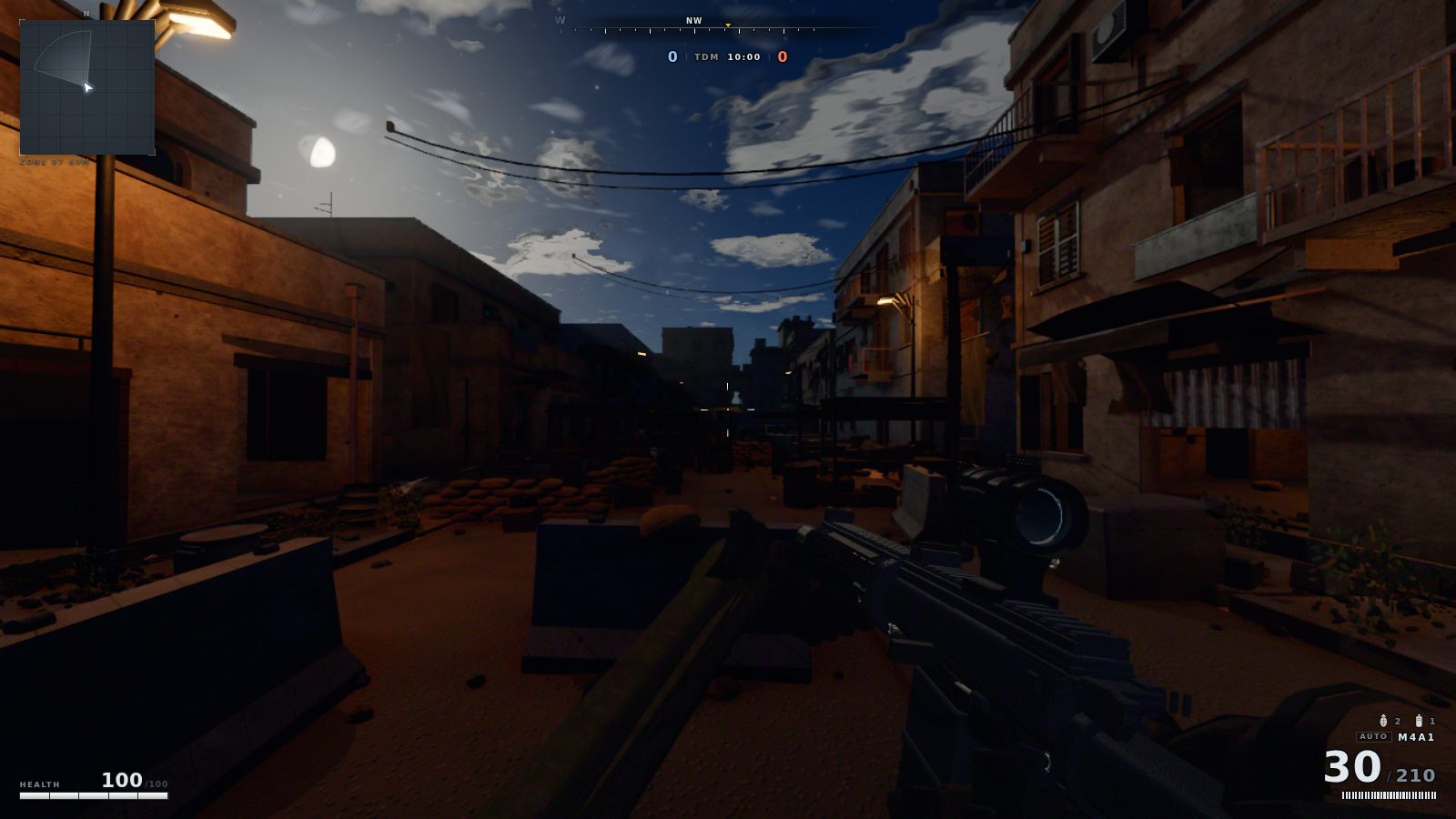
A market street with balconies, awnings, hanging laundry and power lines, seen down the barrel of a rifle
The market street — a modular building kit with real wall thickness and several hundred instanced props.
Mid-recoil muzzle flash lighting the weapon and the street, with a spent case in the air
Muzzle flash, light spill and case ejection.
A building interior with light falling through a window opening onto the street outside
Enterable interiors, lit through their own openings.
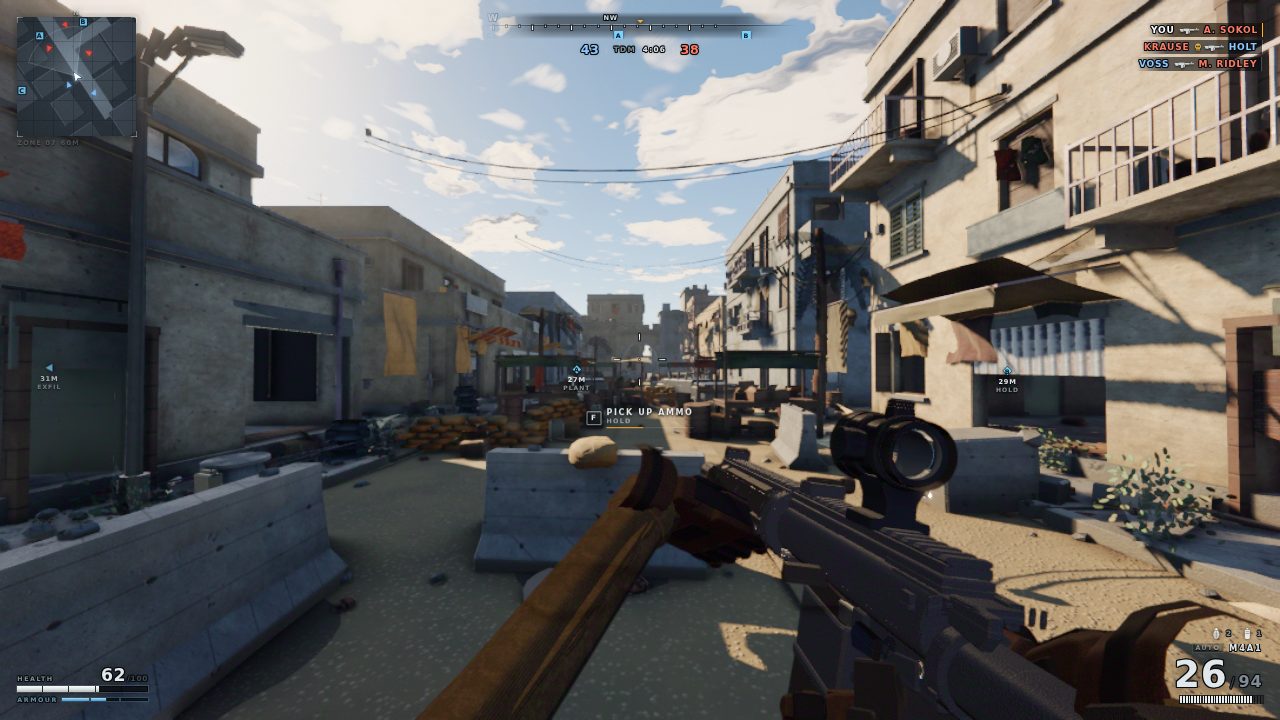
The full combat HUD with minimap, compass, killfeed, objective markers, health and ammunition
The HUD is DOM and CSS — crosshair, minimap, compass, killfeed, objective markers.

ELEVEN SUBSYSTEMS

Written from scratch, including the parts nobody writes from scratch.

Renderer

An HDR pipeline built by hand, not assembled from examples. Cascaded shadow maps with texel snapping and contact hardening, a depth and velocity prepass, ground-truth ambient occlusion, temporal anti-aliasing with variance clipping, motion blur, a Karis bloom pyramid, GPU metering and an AgX composite.

Materials

A texture forge that runs on the GPU. Nineteen surfaces — concrete, brick, plaster, asphalt, sand, rusted and painted and brushed metal, wood, fabric, glass — with periodic noise so everything tiles, height-derived normals, parallax occlusion and curvature-driven edge wear.

Physics

No library. A binned-SAH bounding volume hierarchy, a swept-capsule character controller with a five-plane crease stack, impulse rigid bodies with continuous collision, position-based ragdolls and multi-layer bullet penetration.

Audio

Synthesised through the Web Audio API with no sound files at all. Layered weapon fire, convolution reverb, HRTF spatialisation and occlusion.

Sky

Atmospheric scattering with a time of day, environment maps generated at runtime, volumetric fog and light shafts.

Agents

Skinned soldiers with navmesh pathing, perception, cover behaviour and ragdoll deaths — the meshes and their textures generated like everything else.

WHERE IT CAME FROM

One prompt produced this repository.

“I want you to build a first-person shooter at the level of the most recent Call of Duty games. It should be utterly perfect, visually beautiful, with every single thing done at AAA quality — from textures to physics to anything you could think of.”

Roughly 55,000 lines across eleven subsystems followed, written by a fleet of AI agents working against a shared engine contract, with a harsh visual critic looping on each subsystem until it passed. The full prompt and the harness that reviewed the output are both in the repository.

It is a single-player technical demo, and it is honest about that: there is no multiplayer, no matchmaking and no server. What there is, is a renderer you can read.